2021
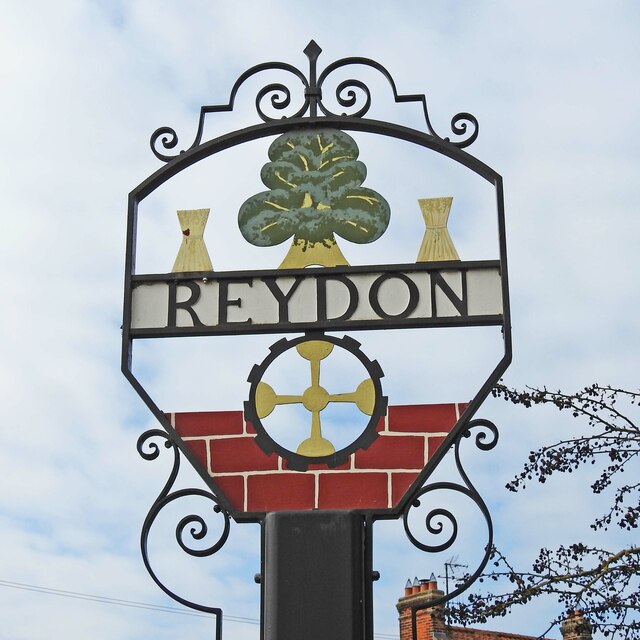
TM5077 : Reydon village sign
taken 6 years ago, near to Reydon, Suffolk, England
This is 1 of 9 images, with title Reydon village sign in this square
Reydon village sign
Thank goodness for the Reydonweb otherwise I would be in trouble working out to what the elements of the sign referred. The brick wall signifies strength in number, the cogwheel is symbolic of progress, also depicting the role played in the past by the village blacksmiths. The cross in the centre of the cogwheel represents the role of the church. The rye sheaf because the name Reydon is probably derived from the word rye and hill, (rey–don) and for the agricultural heritage. The oak tree represents the Reydon oaks which are still quite numerous, despite many being felled in the past for boat-building at neighbouring Southwold. Link


TIP: Click the map for more Large scale mapping
- Grid Square
- TM5077, 125 images (more nearby 🔍)
- Photographer
- Adrian S Pye (more nearby)
- Date Taken
- Tuesday, 9 March, 2021 (more nearby)
- Submitted
- Wednesday, 10 March, 2021
- Subject Location
-
OSGB36:
 TM 50294 77066
[1m precision]
WGS84: 52:20.0717N 1:40.3478E - Camera Location
-
OSGB36:
TM 5030 7707
- View Direction
- West-southwest (about 247 degrees)


