Shared description
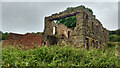
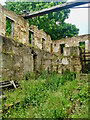
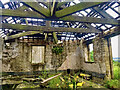
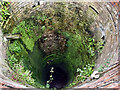
Skelton Park Ironstone Mine
The first thing to say that this site is entirely on private property, please do not visit without prior permission. See Link
Very little remains of Cleveland ironstone mines. It was second only to coal as the UK's biggest extractive industry. Ironstone had been mined in the Cleveland Hills since the 12th Century when primitive furnaces called bloomeries were used to melt the iron out of stone gained from rock outcrops along the dale sides.
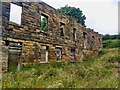
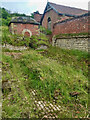
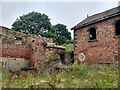
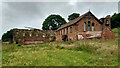
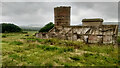
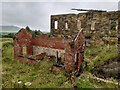
But it was the discovery of good quality ironstone in 1850 in the Eston hills which provided to kick start to an industry upon which Teesside and Cleveland was built. Sadly many of the mining sites have been cleared to be turned into industrial parks or just left as waste ground. Skelton Park is an exception. It's on private land next to a working farm. No Public Right of way passes through it. Consequently the many building have escaped being demolished or simply trashed by generations of local teenagers. The buildings are now considered to be the most complete and best preserved of the Cleveland ironstone mines.
Skelton Park was one of a pair of mines, the other being Skelton Shaft NZ6316, operated by the Bell Brothers. Opened in 1872, its peak production was in 1881 when it had a payroll of 300. Ironstone was transported by a branch line to the North Eastern Railway at Slapewath NZ6315 and on to the Bell Brothers' furnaces at their Clarence Ironworks.
Obviously the wooden headgear has long gone but the range of brick and stone buildings surviving is substantial. The winding house, boiler pump house, power house, ambulance room, time office, blacksmith’s and joiner’s shops, saw mill, the saddler’s shop, the secondary winding engine shed and provender house (for storage of feed for the pit ponies).
The mine was electrified in 1910 and many modern features introduced.
From 1923 the mine was operated by Dorman Long & Co until 1938 when the mine was closed. Although the buildings are considered good, they are suffering from the passage of time. Nature is gradually reclaiming the site. Preservation of the buildings to prevent further deterioration is currently being undertaken by the volunteers of the Cleveland Mining Heritage Society.
by Mick Garratt
Created: Tue, 13 Jul 2021, Updated: Tue, 13 Jul 2021
13 images use this description:
2021

2021
2021
2021
2021
2021

2021
2021
2021
2021
2021
2021

2016
Shared descriptions
This shared description
The 'Shared Description' text on this page is © copyright 2021 Mick Garratt.
Shared descriptions are specifically licensed so that contributors can reuse them on their own images, without restriction.
About shared descriptions
These Shared Descriptions are common to multiple images.
For example, you can create a generic description for an object shown in a photo, and reuse the description on all photos of the object. All descriptions are public and shared between contributors, i.e. you can reuse a description created by others, just as they can use yours.
Explore images
Log in to view extended navigation and 'Explore' links.Other shared descriptions
Descriptions nearby
Related descriptions
- Skelton Shaft Ironstone Mine
By Mick Garratt. Used on 9 images
- South Skelton Ironstone Mine
By Mick Garratt. Used on 17 images
- Long Acres Mine Drift
By Mick Garratt. Used on 2 images
- Heartbreak Hill
By Mick Garratt. Used on 2 images
- Old All Saints Church, Skelton-in-Cleveland
By Mick Garratt. Used on 7 images
- Skelton Castle
By Mick Garratt. Used on 13 images
- Riftswood Viaduct
By Mick Garratt. Used on 3 images
The above selections are automatic and approximate, it might not always select closely matching descriptions
